Walnut Creek Alpacas

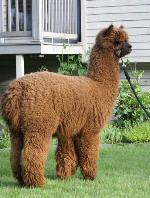
Tika, alpaca

Alpaca History | Alpaca Facts | Farm Basics | Alpaca Books | Resources

Alpaca Facts

There are two types of alpacas:  the “huacaya”, which has fleece with waviness (“crimp”) that gives it a fluffy, Teddy Bear-like appearance.  The fleece of the other type of alpaca, called a “suri”, has no crimp, so the individual fibers wrap around each other to form lustrous pencil locks that hang down from the body, parting elegantly at the spine.

Alpacas are amazingly resilient animals and can be raised in all climates from Canada to Texas.  They stand about 36” tall at the withers and weigh between 100-200 pounds, and establish communal dung piles that are very easy to manage.  They will actually stand in line to go to the rest room, all in one spot, keeping your pastures clean of parasites.

Alpacas need very basic shelter from the rain and heat.  They never challenge a fence.  So remember, fence other animals out, not the alpacas in.  Alpacas eat very little, which makes them the perfect livestock for the small farm.  The small farmer can raise about 10 alpacas per acre of grassland.  A single bale of hay will feed about 20 alpacas for one day.  They eat approximately 2-3 pounds of grass or hay per day making them very economical to raise.

Are they dangerous?  Absolutely not!  They are safe and pleasant to be around.  They do not butt or bite, and do not have horns, hooves, or claws that other types of livestock typically have.  Children can safely feed and care for these wonderful animals.

Will alpacas go by the way of the emu?  Absolutely not!  While the emu started as an exotic livestock and struggled to make it’s place among American farmers, it had 2 things strongly working against it.  Number one: The emu lays eggs, making the reproduction rate outgrow their market.  Number two: They would not be able to compete with beef, chicken, or pork as a viable meat industry.  The alpaca, on the other hand, has always been used for their luxurious fiber and will eventually be raised in herds like sheep.

So, why do people in so many countries call alpacas “The world’s finest livestock investment?”  For any investment to be valuable, it must possess certain qualities that make it desirable.  Gold is scarce, real estate provides shelter, oil produces energy, bonds earn interest, stocks are supposed to increase in value, and diamonds symbolize love.  Alpacas share many of these investment attributes.  Around the world, alpacas are in strong demand, and people pay high prices for them.  They are scarce, unique, and textiles produced from their fiber are known in the fashion centers of Paris, Milan, and Tokyo.  There are excellent profit opportunities and tax advantages available to alpaca breeders.  Being self employed, I paid out income taxes at the end of every year until I got alpacas.  My first year in the alpaca business, I actually got a return on my income tax that paid for my alpaca investment.

I’ve raised a lot of different livestock in my lifetime, such as cattle, horses, pigs, dogs, parrots, chickens, quail, etc.  None of them gave me the joy and profit I have enjoyed raising alpacas.  They are truly phenomenal animals.  If you ever have the opportunity to raise these magnificent creatures, do yourself a favor and jump at the chance.  Find out why alpaca farmers rave about “The Alpaca Lifestyle”.  It will truly change your life mentally and economically.

Top


Dave & Karen Galbraith
Eugenia Kearns

P.O. Box 820
Talihina, Oklahoma 74571
(918) 563-4245
Fax (918) 563-4301
send us an email


Site Map

Home | Alpaca Information | Alpacas For Sale | Herdsires | Breeding |
Fiber | Products | Services | Cria Pics | Videos | Puzzles | About Us | Latest News

Copyright © 2003-2005 Walnut Creek Alpacas